Shopping in Bhutan is a genuinely rewarding experience if you know what to look for. The country produces some beautiful, unique crafts that you simply cannot find anywhere else in the world. But like any tourist destination, there are also items that look Bhutanese but are not, overpriced airport buys, and a few things you absolutely cannot take through customs.
This guide gives you the honest picture.
What to Buy
Textiles and Woven Fabrics
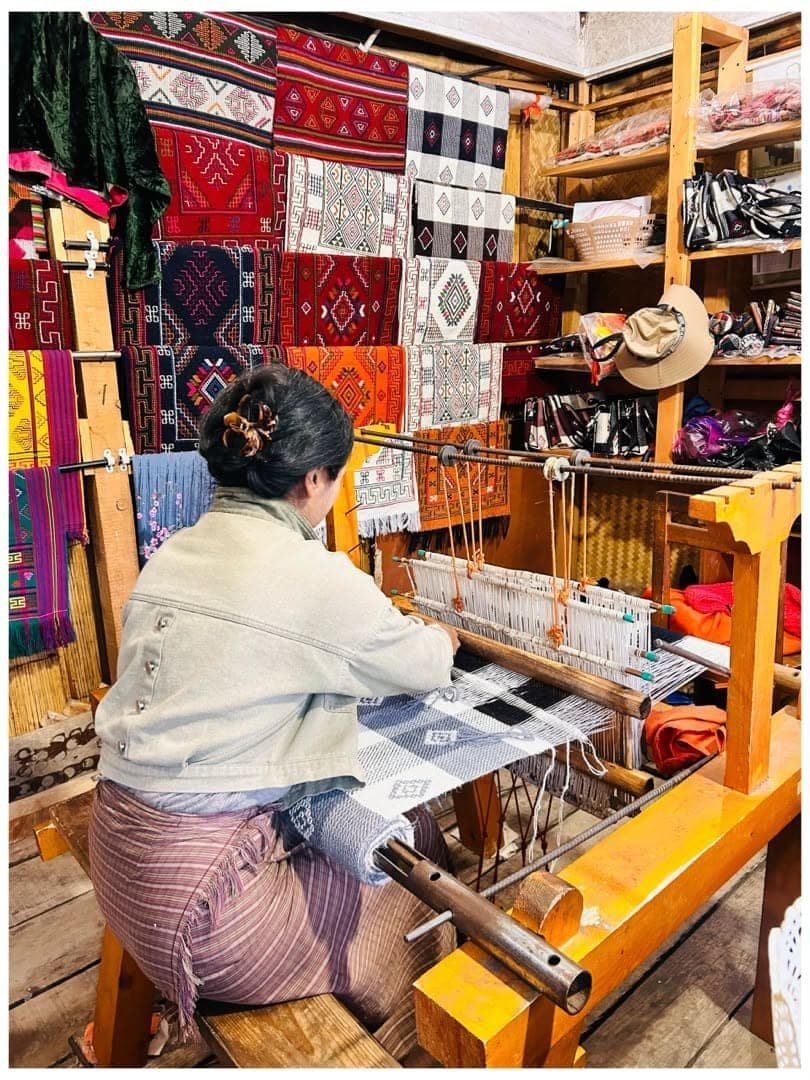
Bhutan’s hand-woven textiles are extraordinary and they are the souvenir I recommend most. The kira (women’s dress) and gho (men’s robe) fabric can be bought by the metre. The best quality comes from Bumthang (natural dye, yak or sheep wool) and eastern Bhutan (raw silk, intricate patterns). Even a small piece of authentic Bhutanese weave is a piece of living culture. Prices vary widely expect to pay more for hand-woven over machine-made.
Incense
Nado Poizokhang incense from Thimphu is one of Bhutan’s most famous exports. Made from medicinal herbs and plants, it is used in monasteries and homes across the Himalayas. It travels well, is light in your bag, and is genuinely made in Bhutan. Available in most shops and at the factory itself in Thimphu.
Wooden Bowls and Carved Items
Hand-turned wooden bowls (dappa), lacquered boxes, and carved masks are traditional Bhutanese crafts. The best quality pieces come from workshops in Thimphu and Paro. Look for items with smooth, even finishing and natural wood grain these are made locally by craftsmen.
Thangka Paintings
A thangka is a Buddhist scroll painting on cotton or silk, depicting deities, mandalas or sacred symbols. Authentic thangkas are hand-painted by trained artists and can take weeks or months to complete. They range from a few hundred to thousands of ngultrum depending on size and quality. Buy from reputable art schools or certified shops your guide can take you to the right place.
Hand-Made Paper (Deh-sho)
Bhutanese hand-made paper is produced from the bark of the daphne plant. It comes in notebooks, cards, lampshades and wrapping paper. Light, beautiful, and uniquely Bhutanese a very easy thing to pack and a meaningful gift.
Stamps
Bhutan is famous among philatelists worldwide for its unusual and creative postage stamps including stamps that are miniature records, 3D holograms, and steel foil. The Bhutan Post shop in Thimphu is the place to go. A small packet of stamps is one of the most unique and lightweight souvenirs you can bring back.
One thing many visitors don’t know Bhutan Post can also print customised stamps with your own photos. Just bring your pictures, choose your design, and they will print personalised stamps for you on the spot. It costs around Nu. 500 and makes for a truly one-of-a-kind keepsake or gift.
Local Food Items
Dried Bhutanese chilli, local honey, butter tea powder and dried yak cheese (churkam) are popular food souvenirs. Check the customs regulations of your home country before packing food items rules on bringing organic material, meat and dairy products vary significantly.
What to Skip
Mass-produced items sold as Bhutanese
Many tourist shops particularly around Thimphu’s main market sell items that are manufactured in China or India and labelled or presented as Bhutanese. Synthetic fabric scarves, machine-printed thangkas, plastic prayer wheels, and cheap metalwork are the most common examples. Some of these goods are brought in from the border town of Jaigaon (Phuntsholing) — the Indian town just across the border from Bhutan and others are sourced from Nepal. If the price seems too low for a hand-crafted item, it almost certainly is not hand-crafted.
Airport shops
The shops at Paro Airport are convenient but expensive. The same item you buy for Nu 500 in a Thimphu craft shop may cost Nu 1,200 at the airport. Do your souvenir shopping in town, not at the departure gate.
Anything you cannot authenticate
If a seller claims something is antique, an original monastery piece, or a “one-of-a-kind” relic be sceptical. Genuine antiques cannot legally be exported (more on this below), and unscrupulous sellers sometimes misrepresent items to justify high prices.
What You Cannot Bring Home
Antiques and religious artefacts
Any item that is genuinely antique more than 100 years old requires a certificate from the Division of Cultural Properties, Department of Culture before it can be exported. In practice, most antiques and original religious artefacts (statues, masks, ritual objects) from temples and dzongs are completely off-limits. If a seller is offering you what appears to be an old religious item, do not buy it.
Wildlife products
Bhutan takes its environment very seriously. Products made from protected wildlife animal skins, bones, feathers of protected birds, horns, or any CITES-listed species are strictly prohibited from export. This also applies internationally under CITES (Convention on International Trade in Endangered Species). Do not buy anything made from animal parts unless you can clearly confirm the species is not protected.
Plants and organic material
Taking live plants, seeds, or certain organic materials out of Bhutan requires a phytosanitary certificate. Beyond Bhutan’s own rules, your home country’s biosecurity laws (especially Australia, New Zealand, USA, Canada and EU nations) may also prohibit or restrict such items at their border.
Where to Shop
- Handicraft Emporium, Thimphu government-run, quality-controlled, authentic Bhutanese products
- Norzin Lam and the weekend market, Thimphu local goods, incense, dried food, everyday items at fair prices
- Sakya Handicraft, Paro run by a friendly cultural guide with a genuine passion for Bhutanese crafts; authentic, quality products and always a warm welcome
- Yoesel Handicraft, Paro another guide-run shop in Paro; same honest approach, authentic Bhutanese products
- Paro main street shops good selection near the dzong area, but some shops do carry Chinese-made goods marketed as Bhutanese. Ask your guide to accompany you so you can tell the difference
- Mountain passes (Dochula, Pelela, Yotongla) local vendors often sell handmade items at the side of the road at passes. These are usually genuine crafts made by the sellers themselves. Buying here directly supports rural families worth stopping for
- Bumthang best place for authentic hand-woven textiles and yak products
Take your time. Talk to the sellers. Ask where things are made and by whom. The best souvenirs from Bhutan are the ones that come with a story and in Bhutan, almost everything does.