Planning to leave Bhutan earlier than expected? Here’s how to claim your unused Sustainable Development Fee (SDF), understand immigration overstay penalties, and avoid a common mistake involving the 24-hour border town waiver.
When planning a trip to Bhutan, most travellers focus on their itinerary, accommodation, transportation and the places they want to visit. Immigration formalities usually receive less attention, especially towards the end of the journey.There are two things every visitor should understand: how to claim a refund for unused Sustainable Development Fee (SDF), and what happens when someone stays beyond their permitted departure date.As a Bhutanese tour guide, I have come across situations where travellers were unsure about the refund process. I have also heard of cases where visitors ended up paying immigration fines simply because they misunderstood the 24-hour SDF waiver in border towns, especially Phuentsholing.These are avoidable, and a little knowledge can save travellers money and trouble.
Understanding Bhutan’s Sustainable Development Fee (SDF)
The Sustainable Development Fee is a mandatory contribution paid by tourists visiting Bhutan. It supports the country’s approach to sustainable tourism and contributes to national development.Currently, the standard SDF for most international tourists is USD 100 per adult per night, while Indian nationals pay Nu. 1,200 per person per night. Reduced rates and exemptions may apply to eligible visitors.The SDF is calculated according to the number of nights spent in Bhutan, not the days of the trip.
For example, if an Indian tourist visits Bhutan from 17 October to 21 October, the journey is five days and four nights.
The SDF calculation would be:
- 17 October – First night
- 18 October – Second night
- 19 October – Third night
- 20 October – Fourth night
- 21 October – Departure from Bhutan
The total SDF would be Nu. 4,800 per adult for the four nights.
When Can Tourists Apply for an SDF Refund?
Travel plans sometimes change, and a visitor may have to return home earlier than planned.If a tourist has already paid the SDF for a longer stay but leaves Bhutan earlier, the unused nights may be eligible for a refund.For example, suppose a tourist initially books a seven-day, six-night trip but returns home after spending only four nights in Bhutan.Since the SDF was paid for six nights, the traveller may request a refund for the two unused nights.The Department of Tourism confirms that refunds are available for canceled or shortened trips, subject to applicable procedures and deductions such as bank charges.
How to Apply for an SDF Refund in Bhutan
The refund process may differ depending on whether the original payment and permit application were completed online, through a travel agent or directly at an immigration office.
If you are applying manually, you will need the following.
1. Write an Application for the Refund
The first step is to prepare a written application requesting a refund of the unused SDF.The application should be addressed to the relevant immigration office and explain why the refund is being requested. Include your full name, nationality, passport or identification document number, entry and exit dates, the number of unused nights and your contact information.A simple letter is enough.
2. Mention Your Bank Details
In the application, provide the bank account information where you want the refund to be transferred.Include the account holder’s name, bank name, account number and any additional banking information required for the transfer.For international bank transfers, details such as the SWIFT code may also be necessary.Check the details carefully. A small mistake in the account details can delay the refund.
3. Attach Copies of Your Entry and Exit Records
Attach proof of your actual arrival and departure from Bhutan.If your passport contains entry and exit stamps, prepare photocopies of the relevant pages.For Indian travellers whose entry and exit records are stamped or issued on separate paper documents, photocopies of those records may be used.If your records are digital, check with the immigration office about the documents they will accept.These documents show how many nights you actually spent in Bhutan.
4. Submit the Application
Once the application and supporting documents are ready, submit them through the channel instructed by the Department of Immigration.If your travel agent or tour operator arranged the original permit and SDF payment, contact them first. They may be able to assist with the refund process.Keep a copy of the application and any acknowledgment you receive.
5. Wait for the Refund
Refunds are not immediate, especially when bank transfers and verification of immigration records are involved.If the refund takes longer than expected, follow up with the relevant office or the person who submitted your original application.
What If You Applied for Your Visa or Permit Online?
For tourists who applied online, the process is generally more straightforward.Visit the official Bhutan Immigration Services Portal at https://immi.gov.bt/ and log in using the account through which your visa or permit was processed.
Check your application and follow the available refund instructions.
If a travel agent completed your application, contact the agent to access the original application and request the refund.According to Bhutan’s official tourism guidance, SDF refund requests should be submitted through the online visa portal, and refunds are processed after visitors leave Bhutan.
Note that the SDF may be refundable, but the USD 40 tourist visa application fee is non-refundable.
Immigration Overstay Fines in Bhutan
Overstaying is a related risk, especially for visitors travelling by road through Bhutan’s southern border towns.Bhutan has strict immigration regulations, and overstaying beyond an authorized visa or permit period can result in a substantial fine.Rule 143 of the Immigration Rules and Regulations published by the Department of Immigration lists a tourist overstay fine of Nu. 18,215 for each day of overstay. Immigration penalties can be expensive, even when the mistake is only one additional night.The safest approach is to check your permit validity carefully and make sure you leave the country within the authorized period.If you intend to extend your stay, arrange the extension before the current visa or permit expires.
A Common Mistake Among Indian Tourists in Phuentsholing
Indian tourists travelling through Phuentsholing should pay attention to this.Bhutan has a 24-hour SDF waiver for eligible visitors staying within designated areas of certain southern border towns, including Phuentsholing, Samtse, Gelephu and Samdrup Jongkhar.The waiver allows eligible casual visitors to enter these designated border-town areas without paying SDF, provided they meet the relevant conditions, including departing within 24 hours.A misunderstanding sometimes occurs when Indian tourists return to Phuentsholing after completing their trip to other parts of Bhutan.Some assume that the 24-hour waiver automatically begins when they arrive back in Phuentsholing, even though they are still travelling on their existing entry permit.
Example: A Five-Day Trip from 17 to 21 October
Imagine a group of Indian tourists travelling to Bhutan for five days and four nights.Their trip begins on 17 October, and they pay the SDF for four nights, with their scheduled departure on 21 October.After visiting Paro, Thimphu and Punakha, they return to Phuentsholing on 21 October.Now, instead of crossing into India that day, they decide to spend another night in Phuentsholing.Their reasoning is simple: Phuentsholing has a 24-hour SDF waiver, so they believe they can remain in town until 22 October without paying anything extra.
The 24-hour SDF waiver does not automatically extend an existing entry permit.
If their authorized stay expires on 21 October, arriving in Phuentsholing on that date does not mean they have officially exited Bhutan.They are still inside the country, and their original immigration permission remains subject to its expiry date.If they simply stay another night without completing the appropriate formalities, they risk being treated as having overstayed.There have been cases where travellers misunderstood this arrangement and subsequently faced immigration fines.
What Should Tourists Do Instead?
If your entry permit expires on 21 October, you should complete your exit formalities and cross into Jaigaon, India, within your authorized period.If you then wish to visit Phuentsholing again under the 24-hour SDF waiver, you must re-enter through the appropriate immigration procedure and meet the conditions of the waiver.Exiting and re-entering should not be treated as an automatic guarantee of permission to stay another 24 hours. Your eligibility and admission remain subject to immigration requirements.Alternatively, if you already know that you want to spend an additional night in Phuentsholing, apply for an extension of your existing permit before it expires.This applies to tourists who prefer to spend their final night in Phuentsholing before travelling to Bagdogra, Siliguri or other destinations in India.
Arriving in Phuentsholing Is Not the Same as Exiting Bhutan
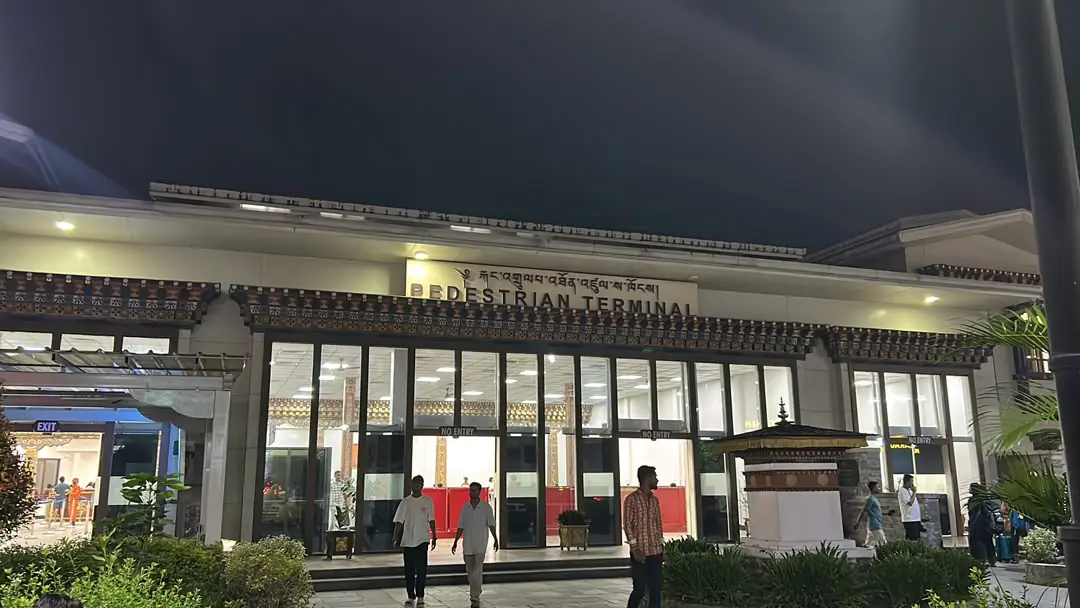
Many travellers consider their Bhutan tour finished once they arrive back in Phuentsholing. From a sightseeing perspective, that may be true.But from an immigration perspective, your visit has not ended until you have completed the necessary exit formalities.The 24-hour border-town waiver and your existing tourist entry permit are two different arrangements.The official SDF waiver procedure also provides a separate refund arrangement for eligible tourists who have processed their e-visa or e-permit in advance and spend a night at a hotel in a designated southern border town during entry or exit. This should not be confused with permission to overstay an expired permit.
What If You Want to Extend Your Stay in Bhutan?
Sometimes tourists want to spend a few additional days in Bhutan, perhaps because they enjoyed the country more than expected or because their travel plans have changed.Extending a visit is possible, but it must be done through the proper immigration procedure.Do not assume that paying additional SDF automatically extends your visa or entry permit.Contact the Department of Immigration or use the appropriate immigration service to arrange an extension before your current permission expires.Additional SDF and any applicable processing charges may need to be paid.It is always better to arrange an extension in advance than to deal with an overstay penalty afterwards.
A Few Things I Recommend as a Bhutanese Tour Guide
Some of these problems can be avoided with a little preparation.First, always check the departure date mentioned on your visa or entry permit. Do not rely entirely on your hotel booking or travel itinerary.Second, keep copies of your immigration documents, payment receipts and entry and exit records. These can be useful when applying for a refund or resolving an issue.Third, if you change your travel dates, inform your guide or tour operator as early as possible. They may be able to help you understand which immigration arrangements need to be updated.For travellers returning through Phuentsholing, make sure you have enough time to complete the border formalities before your permitted stay ends.Never assume that an SDF exemption is also an exemption from immigration requirements.
Final Thoughts
Bhutan is a wonderful country to explore, and immigration formalities should not be the reason a visitor leaves with an unpleasant experience.If you have paid SDF for nights you did not use, check whether you are eligible for a refund. Keep your documents ready, provide the correct bank details and follow the relevant application procedure.Also watch the expiry date of your visa or entry permit. This matters most for Indian travellers using the Phuentsholing border: the 24-hour SDF waiver is not an extension of a completed Bhutan tour.
I have seen how easily travellers can misunderstand these arrangements, and I believe clearer information can prevent unnecessary expenses.A Bhutan trip should end with good memories, not an unexpected immigration fine at the border.
Before leaving Bhutan, check your permit, complete your exit formalities and keep your travel records. It is a small precaution that can save you a lot of trouble.
Official References
For the latest immigration requirements and refund procedures, refer to the following official websites:
- Department of Immigration: https://www.doi.gov.bt/
- Bhutan Immigration Services Portal: https://immi.gov.bt/
- Department of Tourism, Bhutan: https://bhutan.travel/
- Bhutan Tourism FAQ: https://bhutan.travel/faqs